
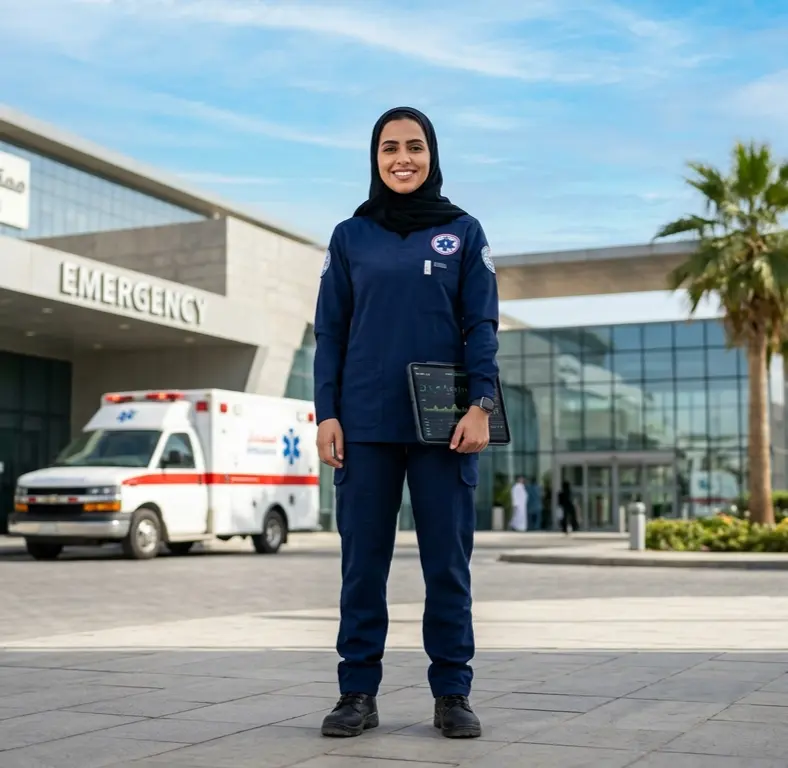
Checklist for EMTs Moving to Saudi Arabia
Relocating to Saudi Arabia as an Emergency Medical Technician can lead to good employment opportunities, competitive pay, and important international healthcare experience. However, while the opportunities are excellent, the relocation process necessitates careful planning, correct documentation, and a thorough understanding of licensing and employment regulations. From credential verification to visa processing and lodging arrangements, each step is critical to making a smooth transfer. Partnering with a trusted healthcare professionals recruitment agency in Kerala can make the process much easier, allowing EMTs to successfully navigate procedures and begin their careers in Saudi Arabia without unnecessary delays.
Professional Credentials and SCFHS Registration
EMTs intending to work in Saudi Arabia must earn the necessary professional certifications and complete the appropriate licensing processes before beginning employment. The Saudi healthcare industry upholds stringent regulations to guarantee that all medical practitioners possess the necessary training and proficiency levels.
- Dataflow Process – Primary Source Verification (PSV): One of the first and most crucial steps is to finish the Dataflow verification procedure. Dataflow performs Primary Source Verification (PSV), which verifies the legitimacy of your professional licenses, job experience, and other supporting documents straight from the issuing authorities. This process is required for all healthcare professionals applying to work in Saudi Arabia and serves to promote transparency and credibility in the healthcare sector. Any errors or insufficient documents might lead to delays or rejection; thus, accuracy and careful preparation are critical.
- Mumaris Plus / SCFHS Eligibility: EMTs must additionally register with the Saudi Commission for Health Specialties (SCFHS) using the Mumaris Plus portal. SCFHS is the official regulatory body responsible for licensing healthcare professionals in Saudi Arabia. Verified school credentials, professional experience certificates, passport information, and other pertinent papers must be submitted by applicants for assessment. Candidates are granted SCFHS eligibility upon successful completion of the review, which is a prerequisite for acquiring a professional licence in the Kingdom and employment.
- Prometric Exam Requirement: To legally practice as an EMT in Saudi Arabia, candidates must pass the SCFHS Prometric examination. This exam assesses the applicant’s clinical knowledge, emergency response abilities, and professional competence in accordance with Saudi healthcare norms. The computer-based test is frequently administered at authorised testing facilities throughout different countries. Passing the Prometric exam is a critical step toward obtaining professional classification and license clearance from SCFHS, which would enable EMTs to function lawfully in Saudi Arabia’s healthcare system.
Essential Documentation for Your Visa
Preparing the proper documents is one of the most critical steps for EMTs heading to Saudi Arabia. Missing or incorrectly attested paperwork can cause delays in both visa clearance and professional license procedures. Organising all documents ahead of time allows for a smoother relocation process and faster onboarding with employment.
- Degree or Diploma Certificates: Candidates are required to present their educational credentials, such as EMT degrees or other relevant medical credentials. These documents are normally required to be legally attested by the HRD (Human Resource Development department), the Ministry of External Affairs (MEA), and the Saudi Embassy. Attestation certifies the authenticity of certificates and is a prerequisite for work visa processing and professional registration in Saudi Arabia.
- Valid Passport: A valid passport is required for visa applications and overseas travel. Most companies and immigration officials require a passport that is at least six months valid from the desired travel date. It is also essential to ensure that the passport has enough blank pages for visa stamping and immigration processes.
- Experience Certificates: Many healthcare businesses in Saudi Arabia want or demand that EMT applicants have at least one to two years of relevant job experience. Experience certificates from prior employers should explicitly state the candidate’s position, length of service, and duties. A well-documented job history enhances the application and increases one’s eligibility for recruitment and licensing.
- Registration or Professional License: Applicants are normally required to show proof of professional registration or licensure from their native country’s medical or healthcare regulatory authorities. This demonstrates that the candidate is legally eligible to work as a healthcare professional in their home country and supports the SCFHS licensing procedure.
- Police Clearance Certificate (PCC): A Police Clearance Certificate (PCC) is usually required during the visa application process to check the applicant’s legal and criminal history. The certificate attests to the applicant’s lack of a major criminal record and their eligibility for employment abroad. Since PCC processing can sometimes take time, applicants are advised to begin this process early to avoid delays in visa approval.
Why You Need a Trusted Nursing Job Agency in Kerala
Applying for a job is just one aspect of moving overseas as a nurse. From licensing procedures and document verification to visa processing and employer coordination, the entire process can be complicated and time-consuming. This is why selecting a reputable nursing job agency in Kerala is critical for a smooth and successful migration process.
At every step of the process, a trustworthy organization offers expert advice that helps nurses comprehend national regulations, testing protocols, documentation needs, and registration routes. They also help with interview preparation, credential verification, visa applications, and relocation assistance, which reduces the possibility of mistakes or delays.
Trusted agencies frequently have contacts with reputable hospitals and healthcare businesses abroad, allowing candidates access to legitimate job possibilities with transparent contracts and greater career prospects. More importantly, they assist nurses in avoiding fraudulent recruitment methods and maintaining compliance with international healthcare recruitment standards.
With the correct counsel and assistance, nurses can confidently establish their international careers while navigating the relocation process more easily and clearly.
Medical and Health Clearances
For EMTs and other medical professionals relocating to Saudi Arabia, obtaining medical and health certifications is a crucial step in the process. These regulations are intended to guarantee that foreign workers are healthy enough to work and do not endanger public health. Completing these processes in advance can help to avoid unnecessary delays in visa clearance and travel arrangements.
GAMCA / Wafid Medical Examination
All expatriates entering Saudi Arabia for employment must undertake a mandated medical fitness examination at authorised GAMCA, now known as Wafid-approved medical clinics. This medical screening is a prerequisite for acquiring a Saudi work visa.
Blood tests, chest X-rays, and general health exams are commonly used to screen for infectious diseases and other medical disorders. Candidates are routinely examined for tuberculosis, hepatitis, HIV, and other infectious diseases in accordance with Saudi immigration regulations. Only those who have been certified medically fit are qualified to move forward with the visa application procedure. Reports are directly related to the visa system; candidates can only take the test at medical facilities that have received official approval.
Vaccination Requirements
Healthcare workers in hospitals and emergency care settings may also be needed to present proof of certain vaccinations and immunisation records. Saudi Arabian hospitals frequently ask for current immunisation records to protect patients and medical staff.
Hepatitis B, COVID-19, influenza, MMR (measles, mumps, and rubella), varicella, and tetanus boosters are examples of often-needed immunisations. Some employers may additionally ask for recent vaccination certificates, antibody titer reports, or occupational health records based on the healthcare facility’s policies. Keeping all vaccination data up to date and conveniently available will assist in streamlining recruitment and onboarding processes.
Living and Working: The EMT Checklist for Moving to Saudi Arabia
- Housing Arrangements: EMTs should be fully aware of the accommodation perks outlined in their job contract before relocating. Many healthcare firms in Saudi Arabia offer company-sponsored housing, which is often located in residential properties designated for expatriates. These complexes might have amenities including supermarkets, fitness centers, transit services, and leisure centers.
Employers may occasionally provide a housing allowance instead, enabling workers to make their own housing arrangements. Knowing if electricity, internet, and maintenance are covered will assist prevent unforeseen costs once you get there.
- Transportation and the Iqama Process: Another crucial consideration for recently arrived medical personnel is transportation. Some hospitals provide transport between their facilities and the workplace, while others may provide transportation allowances.
After landing in Saudi Arabia, expats must undergo the Iqama process, the Kingdom’s official residence permit system. Opening bank accounts, getting SIM cards, signing rental agreements, and using government services are just a few of the crucial tasks that require the Iqama, which serves as a legal identifying certificate. Employers typically help new hires apply for an iqama as soon as they arrive.
- Cultural Preparation and Workplace Etiquette: Understanding Saudi culture and workplace norms can assist EMTs in adjusting more easily to their new professional setting. Respect, professionalism, and cultural awareness are highly valued in Saudi Arabia.
Healthcare personnel should be aware of local customs, modest dress norms, and daily prayer hours, as work schedules and public services may be temporarily halted during prayer. Maintaining respectful communication with colleagues and patients is extremely important in Saudi hospitals and healthcare facilities. Understanding workplace hierarchy, timeliness, and professional etiquette can all help to create a healthy work environment.
- Financial Setup and Banking: Setting up personal finances is a significant step after relocation. Once the Iqama is issued, EMTs can open a Saudi bank account to receive wage payments and handle their daily costs. The majority of large banks provide international remittance services and internet banking, which makes it easy for foreigners to send money to their relatives back home.
Understanding currency exchange rates, transfer fees, and available banking options can assist healthcare professionals in managing their funds and remittances effectively when working overseas. Proper financial planning also allows expatriates to take advantage of the tax-free income opportunities offered in Saudi Arabia.
Conclusion
Moving to Saudi Arabia as an EMT can be a highly rewarding career choice, providing good professional exposure, competitive pay, and useful international healthcare experience. But a smooth shift takes meticulous planning, from organising immigration paperwork, obtaining medical clearances, and making relocation plans to completing the SCFHS license and Dataflow verification. EMTs can prevent needless delays and start their journey with confidence by adhering to a well-planned checklist and remaining aware of the criteria. Working with experienced recruiting and migration consultants, such as Concise International, can further ease the process, allowing healthcare workers to establish a secure and successful career in Saudi Arabia.